The Lack of Binary Gender Roles in Societies of the Past
Binary Gender Roles
It is commonly assumed that every society of the past followed binary gender roles, typically consisting of a female and male gender. While this is true for some societies, there are a significant number of historical societies that believed in more than two genders.
In the past, there have been a variety of cultures that enforced binary gender roles, and their influence continues to be apparent to this day. From 5th to 4th century BCE in Athens, strict gender binary codes were enforced upon people. During this time period, men dominated politics, leading to women having less rights. Similarly, in Imperial China, social hierarchies followed the same structure. From the Han Dynasty to the Qing Dynasty, governments followed Confucian Principles, leading to a strict binary and hierarchical social order. The Confucian Principles included the Three Obediences for women: obedience to father, obedience to husband, and obedience to son. Parallel to that, in Athens only men would participate in scholarly, official, and ancestral leadership roles, and women were seen as unfit to lead. Strict binary gender roles are also apparent in more modern history, as seen in 19th century Britain. The binary gender roles were the most influential part of society at the time, and disrupting this order would have steep consequences. According to society at the time, men belonged in the eye of the public and women belonged in the domestic spaces of their homes. The lines were drawn very clearly, and there was no space for individuals that blurred the lines between the two. 19th century Britain is arguably the most influential era to our modern society’s viewpoint on gender.
Nonbinary Gender Roles
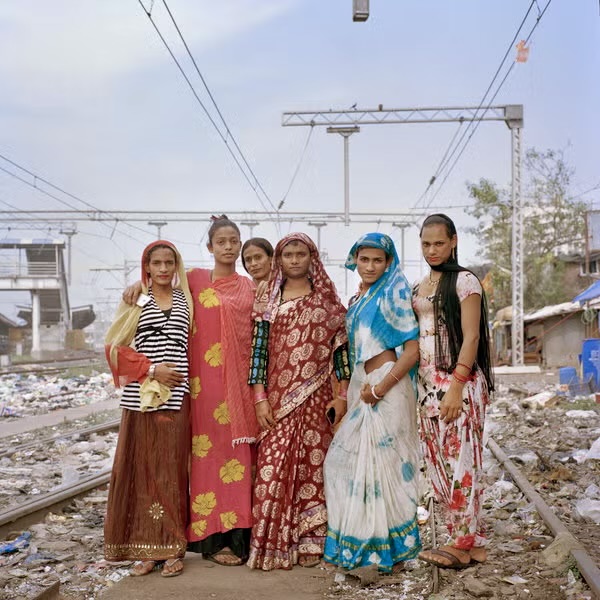
Even so, there were many cultures that recognized more genders outside of the typical male and female binary, specifically in South Asia. Appearing in the Ramayana and Mahabharata, hijras were trans, intersex, or non gender conforming individuals. Historically, hijras occupied recognized social, ceremonial, and spiritual roles throughout the Indian subcontinent. During the Mughal Era, they took high ranking administrative roles in royal courts. However, upon the British Colonial Rule of South Asia, the hijra community was significantly marginalised through the Criminal Tribes Act, which imposed strict binary gender norms with steep consequences to any contravene. Even so, hijras are still found in Mumbai to this day and treated with respect, even invited to weddings as they are thought of as a blessing to the couple. Similarly, Native American cultures also recognized individuals with both male and female spirits, aptly named Two Spirit People. Two Spirit is an overarching term, and different groups of Native Americans have specific terms for Two Spirit People. For example, the Lakota Tribe uses the term Winkte for individuals that cross gender boundaries, and the Crow People use the name Baté for individuals that bridge male and female roles. Two Spirit People were typically healers, meditators, keepers of oral traditions, ceremonial leaders, due to having the gift of both genders.
The Healers of the Past
In these different communities, non-gender-conforming individuals were not merely tolerated. Rather, they were healers, providing medical treatment and spiritual care to their communities. In over 150 Native American Tribes, non-gender-confirming individuals are honored as healers. Similarly, in the Mapuche Tribe in Chile, non-gender-confirming individuals are praised as shamans.
Overall, it is commonly assumed that binary gender roles are universal. However, that is farther from the truth. In many different societies throughout time and around the globe, there have always been people who do not conform to the typical feminine or masculine gender. Additionally, in most cases, these non-gender-confirming populations are honored as shamans and healers, as they hold the power of both genders.
Sources:
- https://www.hrc.org/news/two-spirit-and-lgbtq-idenitites-today-and-centuries-ago
- https://nhm.org/stories/beyond-gender-indigenous-persepctives-mapuche


Leave a Reply