The Representation of Culture and History in Modern Board Games
The Largest National Gaming Convention
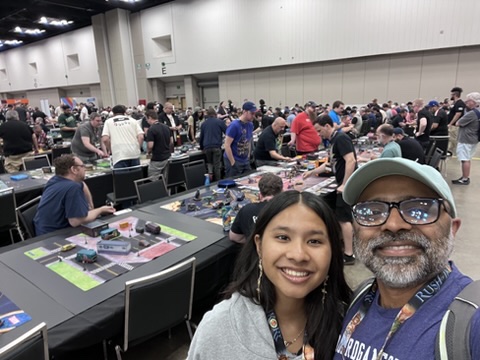
Gen Con. The largest board game convention in the nation. This year, I had the absolute pleasure of attending Gen Con 2026 in Indianapolis, Indiana. Hosted in the Lucas Oil Stadium, the convention was filled with people and board games to the brim. I had the amazing opportunity to both play and purchase many board games, most of which from different areas around the world. In the times of the past, books were what connected and taught people about the world. However, in the modern day and age, board games is what brings people together, making the representation of culture and history in board games all the more important.
Historical Games
For example, John Industry, a game regarding the British expansion into India. While I did not get the opportunity to play this game at Gen Con 2026, I was able to view the game and meet the developer, Cole Wehrle. John Industry beautifully explains the history of India in an understandable and enjoyable format, encapsulating the experience of British kings in a board game. Players understand the power struggles of kings at the time, having to decide between peace or power. The game brings people together due to its fun and strategic nature, allowing players to have fun while learning about the history that India and Great Britain share.
Cultural Games
However, John Industry is a game of a past, allowing us to reflect on what was rather than on what is. What about a game regarding “the now”? There are many responses to that question, one being the 2012 game Tokaido. Tokaido, a game designed by Antoine Bauza, is a short and simple game where players travel the East Sea Road in Japan. Along the way, players get the opportunity to visit hot springs, try new food, paint landscapes, and more, leading to points at the end of the game. Contrasting to John Industry, Tokaido is not a game regarding history; rather it focuses on the culture of Japan, immersing players into a both fun and educational experience.
Similarly, the game Raas: A Dance of Love is a game about Indian culture, specifically in Gujarat. Players act as leaders of dance academies, recruiting dancers for a cultural dance known as Garba. In the game, players collect dresses, provide dandiya sticks, and match songs together in order to get points. Similar to Tokaido, the game Raas: A Dance of Love allows players to immerse themselves in Indian culture while having fun around the table. Cultural games, such as the ones mentioned, also allow people to feel seen and connected to their games while playing. As someone with an Indian heritage, playing games that connect to my culture allow me to see similarities from playing games in my own life. It is always interesting to see how board games represent aspects of my culture and turn it into a game that is enjoyable for all.
Anthropology in Games
How does this relate to anthropology? Anthropology studies how people create, maintain, and pass on ways of living. Culturally themed board games introduce players to these ways of living, such as cuisine, art, and celebrations. Board games also reveal what a society considers important, which is a crucial part of anthropology. For example, games that reward gaining wealth or forming relationships through victory points reveals to players what a community values. Board games are also examples of cultural exchange and cultural transmission. They underline how practices and traditions move between societies, and how these traditions change through generations.
However, when creating a cultural board game, there is a certain question that has to be asked: Who gets to decide how a culture is represented? Representation is a major topic in anthropology, and the representation of culture and history in modern board games is a perfect example. Does a game present a culture as diverse and complex or simplify a culture into pure stereotypes? Does playing a culturally themed board game teach about culture, or does it create a watered down version of that culture?
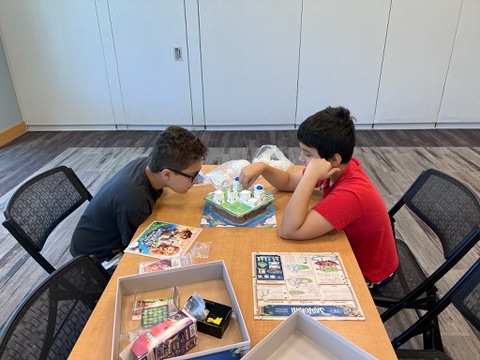
Overall, board games are the new books, educating players regarding history and culture in an enjoyable way. From more serious games such as John Industry to playful games such as Raas: A Dance of Love, different experiences can be celebrated around the table with friends. I encourage you to find a group of friends, look for a local board game club, and have fun playing board games together!
Sources
https://boardgamegeek.com/boardgame/123540/tokaido
https://boardgamegeek.com/boardgame/358912/raas-a-dance-of-love
https://boardgamegeek.com/hotness


Leave a Reply